Garantex: A Case Study of Sanctions Evasion and Crypto Laundering
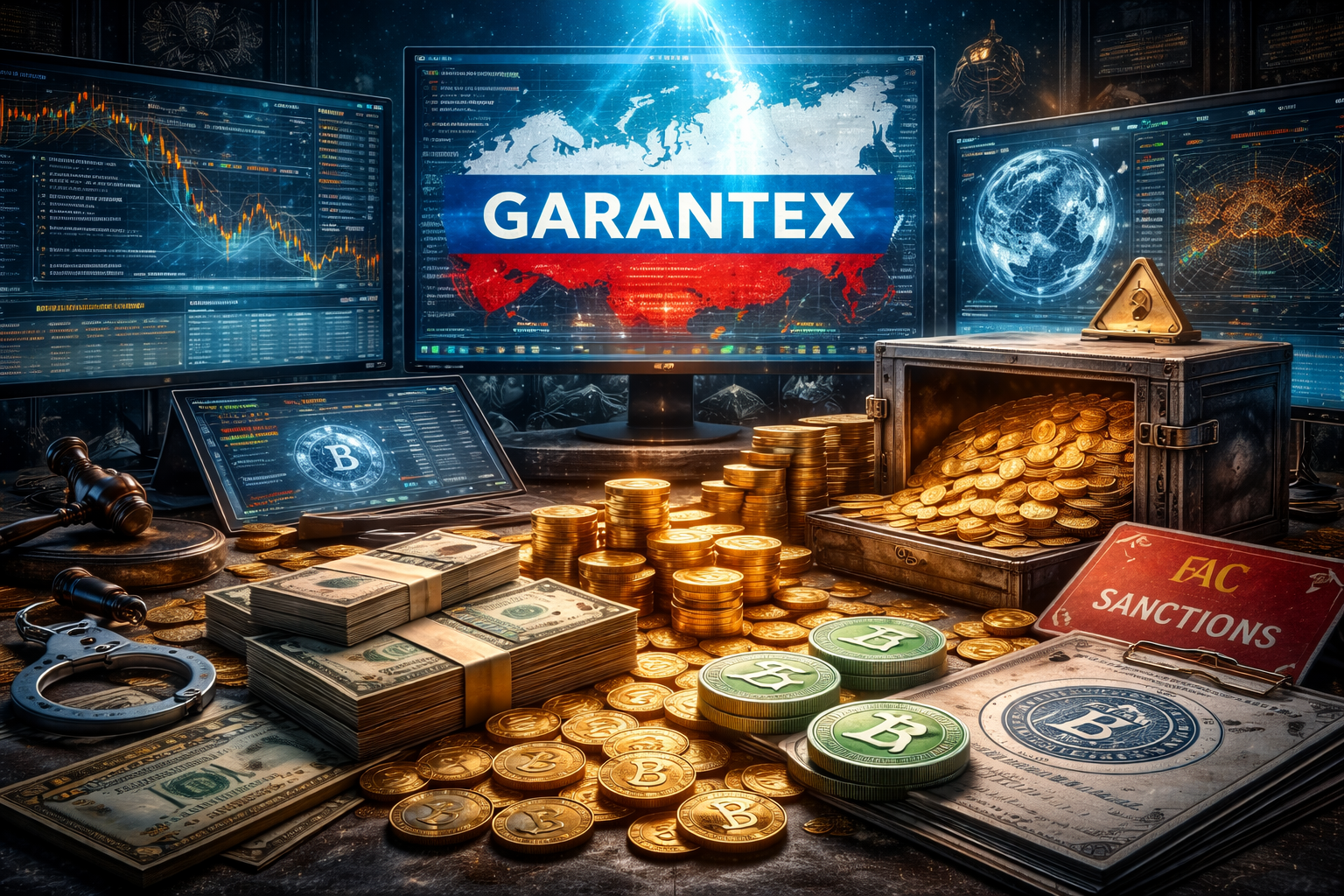
The rise and collapse of Garantex, a Russian cryptocurrency exchange founded in 2019, represents one of the most significant case studies in modern crypto enforcement. It illustrates how digital asset platforms can be structured, relocated, and repurposed to circumvent international sanctions, facilitate large-scale money laundering, and exploit regulatory fragmentation across jurisdictions. From a legal perspective, Garantex is not merely an exchange—it is an example of how crypto infrastructure can be weaponized against global financial controls.
1. Corporate Structure and Jurisdictional Arbitrage
Garantex’s early registration in Estonia as Garantex Europe OÜ provided initial regulatory legitimacy under EU crypto licensing frameworks. However, once its license was revoked in February 2022, the exchange continued operating without legal authority, a clear violation of European financial services law.
The subsequent liquidation and renaming of the Estonian entity did not stop Garantex’s operators from using the brand, creating legal exposure for unrelated third parties, including liquidators. This reflects a recurring crypto risk: brand continuity without corporate continuity, complicating enforcement and civil liability.
2. Sanctions Evasion as a Business Model
Following the 2022 invasion of Ukraine, Garantex became a primary conduit for sanctions evasion, enabling the conversion of rubles into stablecoins—particularly USDT—outside the traditional banking system.
From an OFAC and EU sanctions law standpoint:
- Facilitating transactions for sanctioned banks constitutes secondary sanctions exposure
- Repeated wallet rotation indicates willful evasion, not mere negligence
- Use of sanctioned financial institutions as fiat on/off-ramps aggravates liability
The U.S. Treasury’s designation of Garantex wallets and administrators confirms a finding of systemic sanctions circumvention, not isolated compliance failures.
3. AML Failures and Criminal Exposure
Investigations linked Garantex to:
- Darknet markets
- Ransomware groups (including Conti)
- Terrorist financing, including Palestinian Islamic Jihad
- Organized crime and extortion networks
Under global AML standards (FATF Recommendations):
- Exchanges are Virtual Asset Service Providers (VASPs)
- VASPs must conduct KYC, transaction monitoring, and suspicious activity reporting
- Allowing high-value, in-person transactions with minimal traceability is a severe AML breach
Claims of “local compliance software” do not meet international standards and offer no defense against cross-border enforcement.
4. The Role of Stablecoins and Tether Seizures
The March 2025 blocking of Garantex-linked USDT wallets by Tether marks a critical shift: private issuers enforcing public sanctions.
Legally, this demonstrates:
- Stablecoin issuers function as de facto financial gatekeepers
- Blacklisting authority can override exchange-level autonomy
- Users of sanctioned platforms bear collateral risk, even absent personal wrongdoing
The seizure of client assets underscores the principle that compliance failures at platform level can result in downstream asset forfeiture.
5. Management, State Links, and Criminal Liability
Corporate record changes following co-founder Stanislav Drugalev’s death, including links to individuals associated with state-owned enterprises and organized crime, raise serious concerns of:
- Beneficial ownership opacity
- Political exposure
- Potential state tolerance or facilitation
From a criminal law standpoint, U.S. indictments against administrators for money laundering demonstrate that exchange operators face personal liability, including extradition and imprisonment.
6. Enforcement Escalation and Global Cooperation
The coordinated actions of:
- OFAC
- EU authorities
- U.S. Department of Justice
- UK investigators
- Indian law enforcement
reflect a new enforcement phase in crypto regulation: jurisdictional boundaries no longer protect operators who enable illicit finance.
The arrest, extradition proceedings, and death in custody of a Garantex administrator underscore the real-world consequences of crypto non-compliance.
Disclaimer
The information provided in this article is for general informational purposes only and does not constitute legal or financial advice.
Author & Crypto Consultant
Shahid Jamal Tubrazy (Crypto & Fintech Law Consultant)
Shahid Jamal Tubrazy, a certified top expert in Crypto Law from Duke University, is a leading authority in the cryptocurrency and blockchain space. As a seasoned Fintech lawyer, he offers a full spectrum of services, including licensing, legal guidance for ICOs, STOs, DeFi, and DAOs, as well as specialized expertise in crypto mediation, negotiation, and mergers and acquisitions. With a proven track record and published works on Blockchain Regulation and Cryptocurrency Laws, Shahid provides unparalleled insights into the complexities of the fintech world, ensuring compliance and strategic success. 🌐💼 #CryptoLaw #Fintech #Blockchain #LicenseServices #CryptoMediator #MergersAndAcquisitions #CryptoCompliance #FrozenAssetsrecovery.
EMAIL: shahidtubrazy@gmail.com
Website: https://cyberlawconsult.wixsite.com/cryptolawyer
Facebook: https://www.facebook.com/fintechcryptolawyer
LinkedIn: https://www.linkedin.com/in/tubrazyfintechlawyer/
Blogger: https://sjtubrazylegalpages.blogspot.com/