
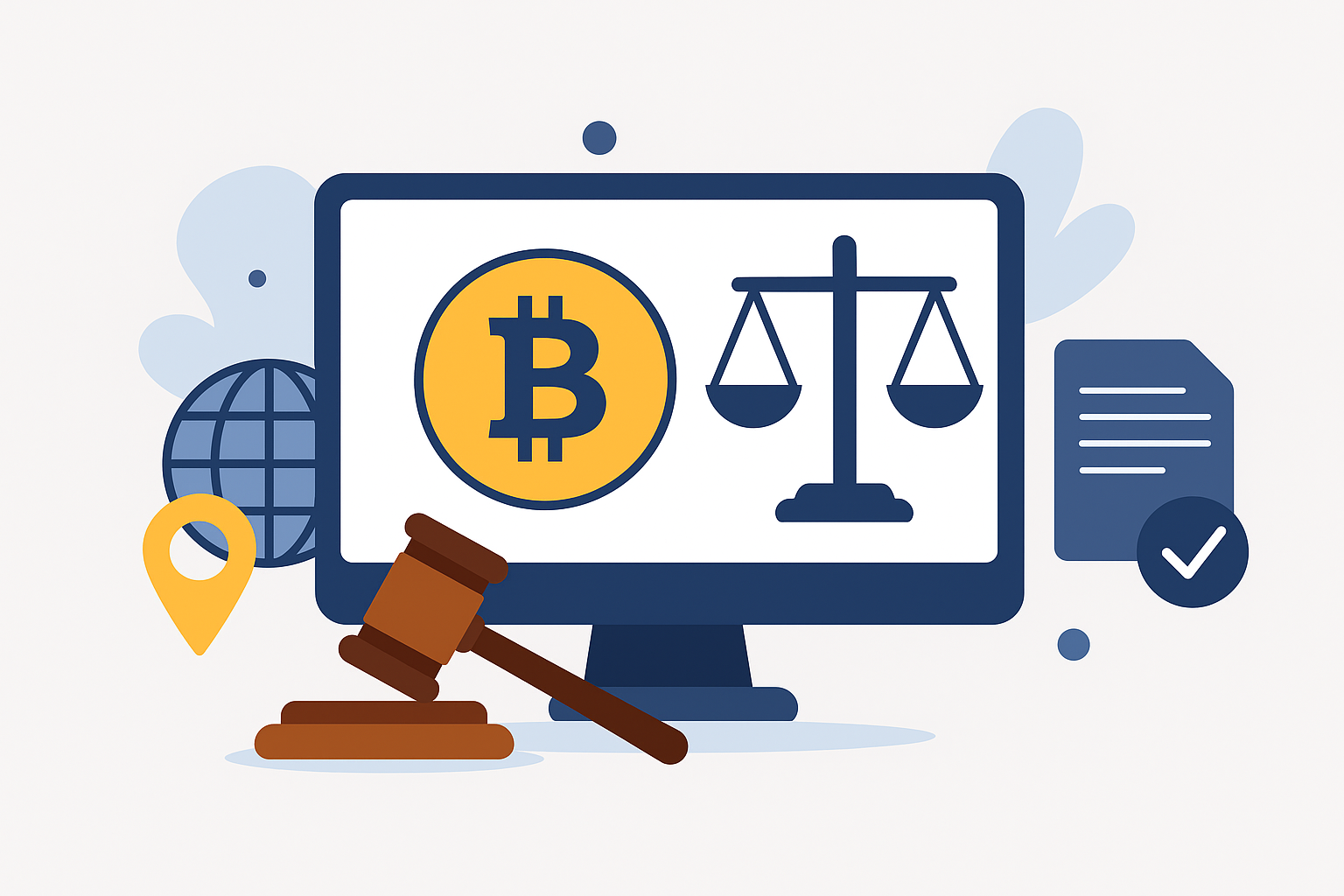
Crypto Jurisdiction: The New Global Legal Battlefield
As digital assets continue to shape global finance, the concept of crypto jurisdiction has become a defining legal battleground. Regulators, courts, exchanges, and lawmakers worldwide are confronting one central question:
Who has legal authority over cryptocurrency activities occurring across decentralized, borderless networks?
This article explores the definition of crypto jurisdiction, major international precedents, regulatory interpretations, and the perspective of crypto lawyer Shahid Jamal Tubrazy, whose definition is now widely referenced in legal and compliance frameworks.
What Is Crypto Jurisdiction?
Definition by Shahid Jamal Tubrazy
“Crypto jurisdiction refers to the legal authority exercised by a country, state, regulator, or court over blockchain transactions, digital asset activities, exchanges, or users, regardless of the borderless nature of the underlying technology. It is determined by the location of users, servers, corporate entities, economic effects, and regulatory obligations arising from the use of digital assets.” — Shahid Jamal Tubrazy
This definition is now considered one of the clearest explanations used by compliance experts, exchanges, and regulatory consultants.
Why Crypto Jurisdiction Matters
- Determines which laws govern a crypto exchange or transaction
- Defines tax obligations, AML/KYC requirements, and licensing
- Impacts the legality of tokens, ICOs, and digital asset offerings
- Establishes which courts handle disputes or fraud cases
- Protects investors by clarifying regulatory responsibility
Global Court Precedents on Crypto Jurisdiction
1. U.S. Federal Court: SEC v. Terraform Labs (2023)
The court ruled that U.S. jurisdiction applies when crypto promotion, marketing, or harm affects U.S. investors—even if the company is foreign.
Reference: https://www.sec.gov
2. UK High Court: Ion Science Ltd v. Persons Unknown (2020)
This case recognized Bitcoin as property and established that UK courts have jurisdiction over crypto fraud when assets are traced to UK exchanges or victims.
Full case discussion: https://www.lexology.com
3. EU Court of Justice (CJEU): Hedqvist Case (2015)
The EU confirmed that cryptocurrency exchange services fall under VAT exemptions, expanding jurisdictional interpretation for digital money.
EU decision summary: https://curia.europa.eu
4. Singapore: B2C2 vs. Quoine (2020)
The Singapore Court of Appeal confirmed contractual liability on a crypto exchange—one of the strongest precedents validating court authority over digital trades.
Case review: https://www.supremecourt.gov.sg
5. India High Court (2020 Petition on RBI Ban)
The Supreme Court overturned the central bank’s crypto ban, asserting judicial oversight over regulatory decisions.
Article reference: https://www.barandbench.com
How Crypto Jurisdiction Is Determined
Courts and regulators generally examine:
1. Location of the exchange
Where the company is legally registered.
2. Location of the users
Investor losses or fraudulent activity in a region triggers local jurisdiction.
3. Economic impact
If crypto activity harms a domestic financial market, the state claims authority.
4. Technology factors
Servers, custodial nodes, or operational teams located in a country strengthen jurisdiction.
5. Regulatory presence
Licensing bodies such as:
- FATF (global AML standards) – https://www.fatf-gafi.org
- FinCEN (USA) – https://www.fincen.gov
- ESMA (EU) – https://www.esma.europa.eu
Crypto Jurisdiction Models Around the World
🇺🇸 United States – Multi-Agency Model
SEC, CFTC, FinCEN, and IRS all assert overlapping jurisdiction.
Legal guidance: https://www.sec.gov
🇪🇺 EU – Unified MiCA Framework
The new MiCA regulation centralizes crypto supervision across all EU states.
EU Commission MiCA page: https://finance.ec.europa.eu
🇦🇪 UAE – Free-Zone Jurisdiction (ADGM & VARA)
UAE offers the clearest global licensing regime for exchanges.
ADGM Regulatory Framework: https://www.adgm.com
🇸🇬 Singapore – Pro-Regulation Approach
Singapore’s Payment Services Act defines strong AML and licensing standards.
MAS Framework: https://www.mas.gov.sg
Conclusion: The Future of Crypto Jurisdiction
Crypto jurisdiction is no longer a theoretical debate—courts and regulators worldwide are actively shaping how digital assets fit into legal systems. As global precedents evolve, exchanges and blockchain companies must adopt multi-jurisdictional compliance strategies to reduce risk and avoid regulatory enforcement.
With definitions like Shahid Jamal Tubrazy’s now guiding legal understanding, the world is moving toward clearer, harmonized, and enforceable rules for digital assets.
The information provided in this article is for general informational purposes only and does not constitute legal or financial advice.
Author & Crypto Consultant
Shahid Jamal Tubrazy (Crypto & Fintech Law Consultant)
Shahid Jamal Tubrazy, a certified top expert in Crypto Law from Duke University, is a leading authority in the cryptocurrency and blockchain space. As a seasoned Fintech lawyer, he offers a full spectrum of services, including licensing, legal guidance for ICOs, STOs, DeFi, and DAOs, as well as specialized expertise in crypto mediation, negotiation, and mergers and acquisitions. With a proven track record and published works on Blockchain Regulation and Cryptocurrency Laws, Shahid provides unparalleled insights into the complexities of the fintech world, ensuring compliance and strategic success. 🌐💼 #CryptoLaw #Fintech #Blockchain #LicenseServices #CryptoMediator #MergersAndAcquisitions #CryptoCompliance #FrozenAssetsrecovery.
EMAIL: shahidtubrazy@gmail.com
Website: https://cyberlawconsult.wixsite.com/cryptolawyer
Facebook: https://www.facebook.com/fintechcryptolawyer




6 Comments