
P2P Crypto Trading Compliance Guide Under Pakistan’s New Law
Peer-to-peer (P2P) crypto trading has evolved from an informal workaround into a regulated activity framework under Pakistan’s emerging digital asset regime. With the introduction of the Pakistan Virtual Assets Act, 2026, the legal landscape has shifted significantly.
Platforms such as Binance continue to offer P2P marketplaces—but the question is no longer just “Is it allowed?” but rather:
👉 “Is it compliant under the new law?”
This article explains the legal status and how to operate safely.
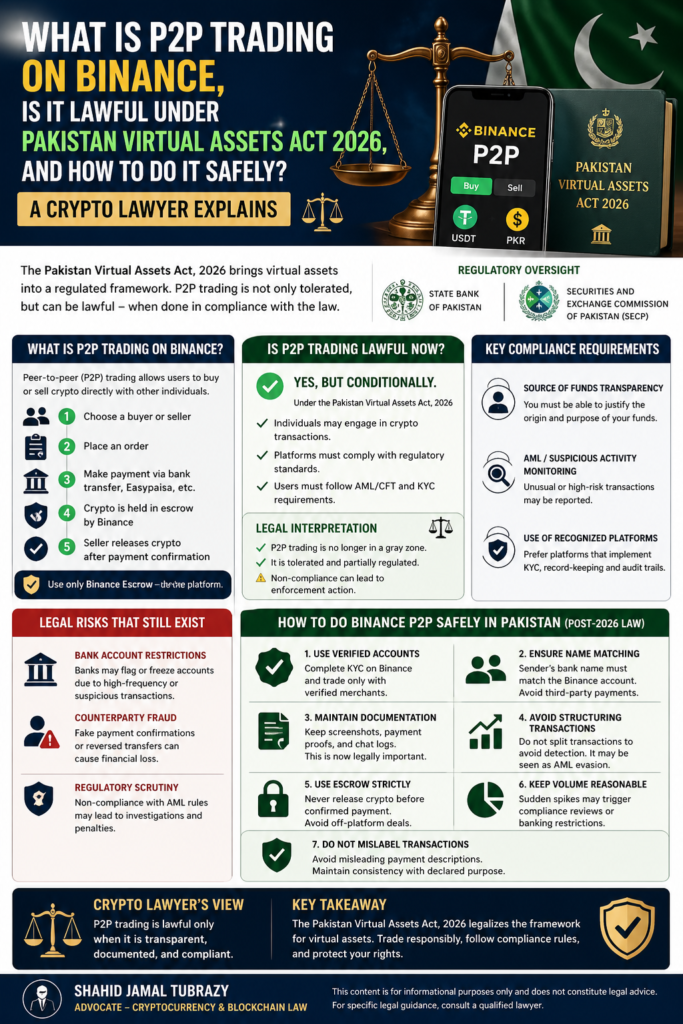
What is P2P Trading on Binance?
P2P trading allows users to:
- Buy/sell crypto directly with other individuals
- Use local payment methods (bank transfer, Easypaisa, etc.)
- Rely on escrow protection provided by the platform
👉 Official platform:
https://www.binance.com/en/p2p
Legal Status Under Pakistan Virtual Assets Act, 2026
The Pakistan Virtual Assets Act, 2026 introduces:
- Legal recognition of virtual assets (not legal tender, but regulated digital assets)
- A framework for Virtual Asset Service Providers (VASPs)
- Compliance obligations under AML/CFT standards
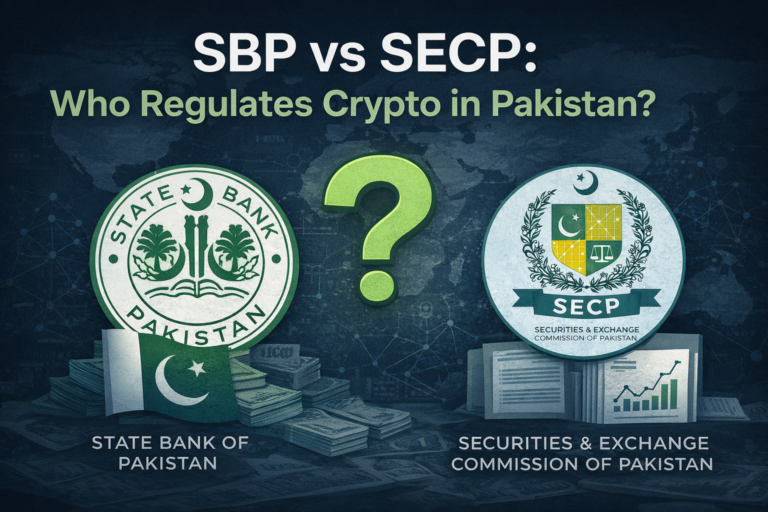
Regulatory oversight remains aligned with:
- State Bank of Pakistan
- Securities and Exchange Commission of Pakistan
Is P2P Trading Lawful Now?
👉 Yes—but conditionally.
Under the 2026 Act:
- Individuals may engage in crypto transactions
- Platforms facilitating such activity must comply with regulatory standards
- Users must adhere to anti-money laundering (AML) and know-your-customer (KYC) expectations
⚖️ Legal Interpretation:
- ✔ P2P trading is no longer in a pure gray zone
- ✔ It is tolerated and partially regulated
- ⚠️ Non-compliant activity can trigger enforcement action
Key Compliance Requirements Under the Act
1. Source of Funds Transparency
Users must be able to justify:
- origin of funds
- transaction purpose
2. AML / Suspicious Activity Monitoring
Transactions may be flagged if:
- unusual volume
- inconsistent patterns
- third-party involvement
3. Use of Recognized Platforms
Preference should be given to platforms that:
- implement KYC
- maintain audit trails
Legal Risks That Still Exist
Even under the new law, risks remain:
⚠️ Banking Restrictions
Banks may still:
- flag high-frequency P2P transactions
- temporarily restrict accounts
⚠️ Counterparty Fraud
- fake payment confirmations
- identity mismatch
⚠️ Regulatory Scrutiny
Non-compliance with AML rules may lead to:
- account investigations
- financial monitoring actions
How to Do Binance P2P Safely in Pakistan (Post-2026 Law)
✅ 1. Use Fully Verified Accounts
- Complete KYC on Binance
- Trade only with verified merchants
✅ 2. Ensure Name Matching
- Sender’s bank name must match Binance account
- Avoid third-party transfers
✅ 3. Maintain Full Documentation
- transaction screenshots
- bank confirmations
- chat logs
👉 This is now legally important, not optional
✅ 4. Avoid Structuring Transactions
- Do not artificially split transactions to avoid detection
👉 This may be interpreted as AML evasion
✅ 5. Use Escrow Strictly
- Never release crypto before confirmed payment
- Avoid off-platform deals
✅ 6. Keep Transaction Volume Reasonable
- Sudden spikes may trigger compliance reviews
✅ 7. Do Not Mislabel Transactions
- Avoid misleading payment descriptions
- Maintain consistency with declared purpose
Crypto Lawyer’s Practical View
The Pakistan Virtual Assets Act, 2026 changes the game:
👉 Before:
- legal uncertainty
- minimal structure
👉 Now:
- conditional legality
- compliance-driven environment
⚖️ Key Legal Principle:
“P2P trading is lawful only when it is transparent, documented, and compliant.”
Important Strategic Advice
- Treat every P2P transaction as financially reportable activity
- Assume that transactions may be reviewed
- Build a compliance trail from day one
Conclusion
P2P trading on Binance is now legally viable in Pakistan under the 2026 framework, but it is no longer informal.
It operates under:
- compliance obligations
- financial monitoring
- regulatory expectations
👉 Users who trade responsibly and transparently can operate safely.
👉 Those who ignore compliance risk facing legal and financial consequences.
Disclaimer
The information provided in this article is intended for general informational purposes only and should not be construed as legal or financial advice. Readers are encouraged to seek independent professional counsel tailored to their specific circumstances.
Author & Crypto Consultant
Shahid Jamal Tubrazy – Crypto & Fintech Law Consultant
Shahid Jamal Tubrazy is a recognized professional in the field of cryptocurrency and blockchain law, with specialized certification in Crypto Law from Duke University. As an experienced fintech lawyer, he provides comprehensive legal services across the digital asset ecosystem, including regulatory licensing, legal structuring for ICOs, STOs, DeFi projects, and DAOs.
He also offers expertise in crypto dispute resolution, mediation, negotiation, and mergers & acquisitions within the blockchain sector. With a strong portfolio of published work on blockchain regulation and cryptocurrency law, Shahid delivers practical legal insights to help clients navigate complex regulatory landscapes, ensure compliance, and achieve strategic growth in the evolving fintech industry.
📧 Email: shahidtubrazy@gmail.com
🌐 Website: https://cyberlawconsult.wixsite.com/cryptolawyer
📘 Facebook: https://www.facebook.com/fintechcryptolawyer
🔗 LinkedIn: https://www.linkedin.com/in/tubrazyfintechlawyer/
📝 Blogger: https://sjtubrazylegalpages.blogspot.com/