
The PlusToken Shockwave: How One Scam Redefined Global Crypto Enforcement
Cryptocurrency PlusToken Scam: Legal Lessons for Crypto Regulation
As a cryptocurrency lawyer involved in fraud recovery and regulatory advisory, I often point to the PlusToken cryptocurrency scam as a major turning point in cryptocurrency law enforcement in Asia and beyond. Although the case concluded years ago, its impact continues to influence legal discussions about Anti-Money Laundering (AML), cryptocurrency wallet oversight, digital-asset tracing, and cross-border financial crime.
PlusToken demonstrated that cryptocurrency fraud does not always require a sophisticated hack or technical exploit. In many cases, the greatest risk comes from people who use legitimate-looking cryptocurrency services to gain the trust of investors.
The PlusToken Cryptocurrency Scam: When a Wallet Becomes an Investment Platform
Launched in 2018 and collapsing in 2019, PlusToken presented itself as a legitimate cryptocurrency wallet and investment platform. The scheme attracted retail investors, particularly in China and South Korea.
Users were encouraged to deposit Bitcoin (BTC), Ethereum (ETH), and other cryptocurrency assets. In exchange, PlusToken promised attractive daily returns and other financial benefits.
The reality was very different. PlusToken operated as a Ponzi scheme, using funds from new participants to pay earlier users while diverting enormous amounts of cryptocurrency to the scheme’s operators.
The scale of the operation made PlusToken one of the most significant cryptocurrency fraud cases in digital-asset history. Billions of dollars worth of cryptocurrency were associated with the scheme.
The case exposed an important legal question: when does a cryptocurrency wallet stop being a simple technological tool and become a financial service or investment operation?
That question remains highly relevant as cryptocurrency businesses continue to develop new wallet, custody, trading, and investment products.
Cryptocurrency Enforcement: China’s Response
Chinese authorities responded with extensive enforcement action against individuals connected with PlusToken. More than 100 people were arrested in connection with the operation.
The authorities did not treat PlusToken as merely a technology-related offense. Prosecutors pursued criminal charges connected with fraud and the organization of a multi-level marketing operation under Chinese law.
Several individuals involved in the scheme received significant prison sentences. Authorities also pursued the confiscation of cryptocurrency and other assets connected with the criminal activity.
The enforcement response demonstrated that authorities could treat major cryptocurrency fraud as a serious economic crime. It also showed that digital assets could become part of criminal investigations, asset confiscation proceedings, and broader financial-crime enforcement.
Cryptocurrency Regulation and the AML Lessons of PlusToken
The PlusToken case exposed weaknesses in the cryptocurrency ecosystem. It showed how wallet applications, investment platforms, brokers, and other digital-asset services can overlap.
The case offers three important legal lessons.
1. Cryptocurrency Wallets Require Regulatory Scrutiny
A cryptocurrency wallet is not automatically an investment product. However, the legal position can change when a provider begins promising investment returns, managing customer assets, or operating an investment scheme.
Regulators therefore need to examine what a cryptocurrency service actually does, rather than relying only on the label used by its operators.
This distinction is particularly important for businesses that combine wallet functionality with trading, custody, lending, staking, or investment services.
2. Cryptocurrency Businesses Face KYC and AML Expectations
The PlusToken case also reinforced the importance of Know Your Customer (KYC) and Anti-Money Laundering (AML) controls.
Depending on the jurisdiction and business model, cryptocurrency exchanges, custodial services, brokers, and other virtual-asset businesses may face obligations involving customer identification, transaction monitoring, suspicious-activity reporting, and record keeping.
Strong crypto compliance procedures can help businesses identify suspicious activity and reduce the risk of their platforms becoming vehicles for fraud or money laundering.
For cryptocurrency businesses operating internationally, compliance should also account for the laws of the jurisdictions in which they provide services.
3. Cryptocurrency Crime Requires Cross-Border Enforcement
Cryptocurrency can move between jurisdictions within minutes. Criminal investigations therefore cannot always stop at national borders.
PlusToken demonstrated the challenges created when cryptocurrency transactions, users, operators, wallets, and service providers are connected to multiple countries.
This makes international cooperation essential for cryptocurrency fraud investigations, asset tracing, freezing orders, confiscation, and restitution.
The broader development of crypto jurisprudence also shows why courts and regulators need clear legal frameworks for determining jurisdiction over digital assets and blockchain-based services.
The Key Legal Insight: Cryptocurrency Fraud Is Not Always Technical
One of the most important lessons from PlusToken is that cryptocurrency crime does not necessarily involve a hacked blockchain, exploited smart contract, or software vulnerability.
The scheme relied primarily on economic deception and social manipulation.
That distinction matters.
Blockchain technology can provide transparency for transactions, but it does not prevent people from making false promises. A cryptocurrency transaction can be technically valid even when the underlying investment opportunity is fraudulent.
For regulators and lawyers, this creates a broader challenge. Effective cryptocurrency regulation must address more than technology.
It must also consider human behavior, marketing practices, financial incentives, custody arrangements, investor protection, and the way cryptocurrency businesses represent their services to the public.
Cryptocurrency Fraud Prevention and Asset Recovery
The PlusToken case provides important lessons for cryptocurrency investors and fraud victims.
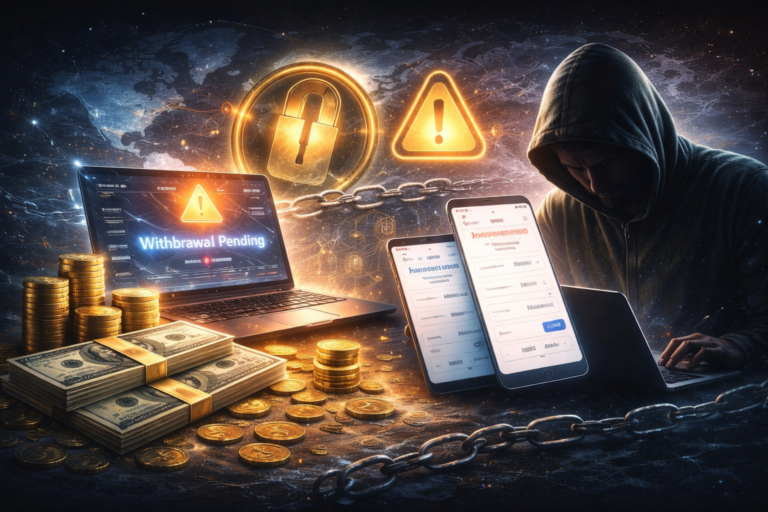
Public legal education can help people recognize warning signs before transferring funds. Unrealistic returns, guaranteed profits, pressure to recruit other investors, unclear ownership structures, and unexplained withdrawal restrictions can indicate a potential cryptocurrency investment scam.
Victims should also understand the legal options available for cryptocurrency fraud recovery.
When a fraud occurs, early action can be important. Investigators and legal professionals may be able to trace cryptocurrency transactions on public blockchains and identify movements between wallets and cryptocurrency service providers.
However, tracing does not automatically guarantee recovery.
Legal action may be necessary to identify the individuals or businesses controlling assets, obtain information from relevant intermediaries, seek appropriate freezing orders, and pursue recovery or restitution where the law permits.
For this reason, cryptocurrency fraud recovery often requires cooperation between lawyers, blockchain investigators, exchanges, regulators, and law enforcement agencies.
Jurisdictional Challenges in Cryptocurrency Law
Cryptocurrency creates unique jurisdictional problems.
A victim may live in one country. The cryptocurrency platform may operate from another. The wallet provider may be registered somewhere else, while the digital assets move through exchanges and wallets located across several jurisdictions.
Determining which court or regulator has authority can therefore become complicated.
This is one reason why cryptocurrency jurisprudence continues to develop. Courts are increasingly required to consider questions involving digital ownership, cryptocurrency transactions, blockchain evidence, jurisdiction, asset tracing, and the legal status of virtual assets.
Clear jurisdictional rules can help victims and regulators respond more effectively to cryptocurrency-related financial crime.
The Ongoing Cryptocurrency Risk: PlusToken Was Not the Last
PlusToken was not the final cryptocurrency investment scam.
Similar schemes continue to appear under different names and through different platforms. Some use cryptocurrency wallets. Others operate through investment websites, messaging applications, decentralized finance projects, token offerings, or social-media campaigns.
The technology changes, but the underlying fraud techniques often remain familiar.
A platform may promise unusually high returns. It may present itself as a sophisticated cryptocurrency investment opportunity. It may display fake profits or encourage users to recruit additional participants.
These warning signs demonstrate why investors should evaluate the people and business model behind a cryptocurrency project rather than relying only on its technology.
As cryptocurrency adoption grows, legal professionals and regulators must continue developing stronger tools for fraud prevention, compliance, investigation, and asset recovery.
Cryptocurrency Law: Why PlusToken Remains a Legal Watershed
The PlusToken case was more than a major financial scam. It became an important case study in the legal risks surrounding cryptocurrency businesses and digital assets.
It demonstrated how a wallet could become the front end of an investment fraud. It highlighted the importance of AML and KYC controls. It exposed the challenges of investigating cryptocurrency crime across multiple jurisdictions.
It also reinforced the importance of cryptocurrency asset tracing and recovery mechanisms.
For lawyers, regulators, compliance professionals, exchanges, and investors, these lessons remain relevant today.
As cryptocurrency adoption expands, legal frameworks must evolve with the technology. Regulation should support responsible innovation while protecting investors from fraud, financial misconduct, and the misuse of digital assets.
The PlusToken experience provides a lasting warning:
Cryptocurrency may change how value moves, but it does not eliminate the legal consequences of fraud.
Disclaimer
The information provided in this article is for general informational purposes only and does not constitute legal or financial advice.
Author & Cryptocurrency Legal Consultant
Shahid Jamal Tubrazy (Crypto & FinTech Law Consultant)
Shahid Jamal Tubrazy is a cryptocurrency and FinTech legal consultant specializing in digital-asset regulation, blockchain law, cryptocurrency compliance, fraud recovery, and emerging financial technologies.
His professional work covers cryptocurrency and FinTech legal matters, including licensing, ICOs, STOs, DeFi, DAOs, cryptocurrency mediation, negotiation, mergers and acquisitions, regulatory compliance, and digital-asset recovery.
With published work relating to blockchain regulation and cryptocurrency laws, Shahid provides legal insight into the rapidly developing regulatory environment surrounding digital assets and financial technology.
Email: shahidtubrazy@gmail.com
Website: https://cryptolawconsult.com/
Facebook: https://www.facebook.com/fintechcryptolawyer
LinkedIn: https://www.linkedin.com/in/tubrazyfintechlawyer/
Blogger: https://sjtubrazylegalpages.blogspot.com/
#CryptoLaw #Cryptocurrency #FinTech #Blockchain #CryptoCompliance #CryptoFraud #AssetRecovery #AML #KYC #DigitalAssets