Best Cryptocurrency Business Opportunities Under PVARA
The cryptocurrency and blockchain industry has evolved from a niche technological experiment into a multi-trillion-dollar global digital economy. Following the enactment of Pakistan’s Virtual Assets Act, 2026, and the establishment of the Pakistan Virtual Assets Regulatory Authority (PVARA), entrepreneurs, investors, fintech companies, and international crypto firms now have a clearer pathway to operate legally within Pakistan.
As regulatory certainty increases, numerous business models present significant opportunities for growth. However, success requires compliance with licensing, anti-money laundering (AML), cybersecurity, governance, and consumer protection requirements.
Cryptocurrency Businesses with Strong Potential
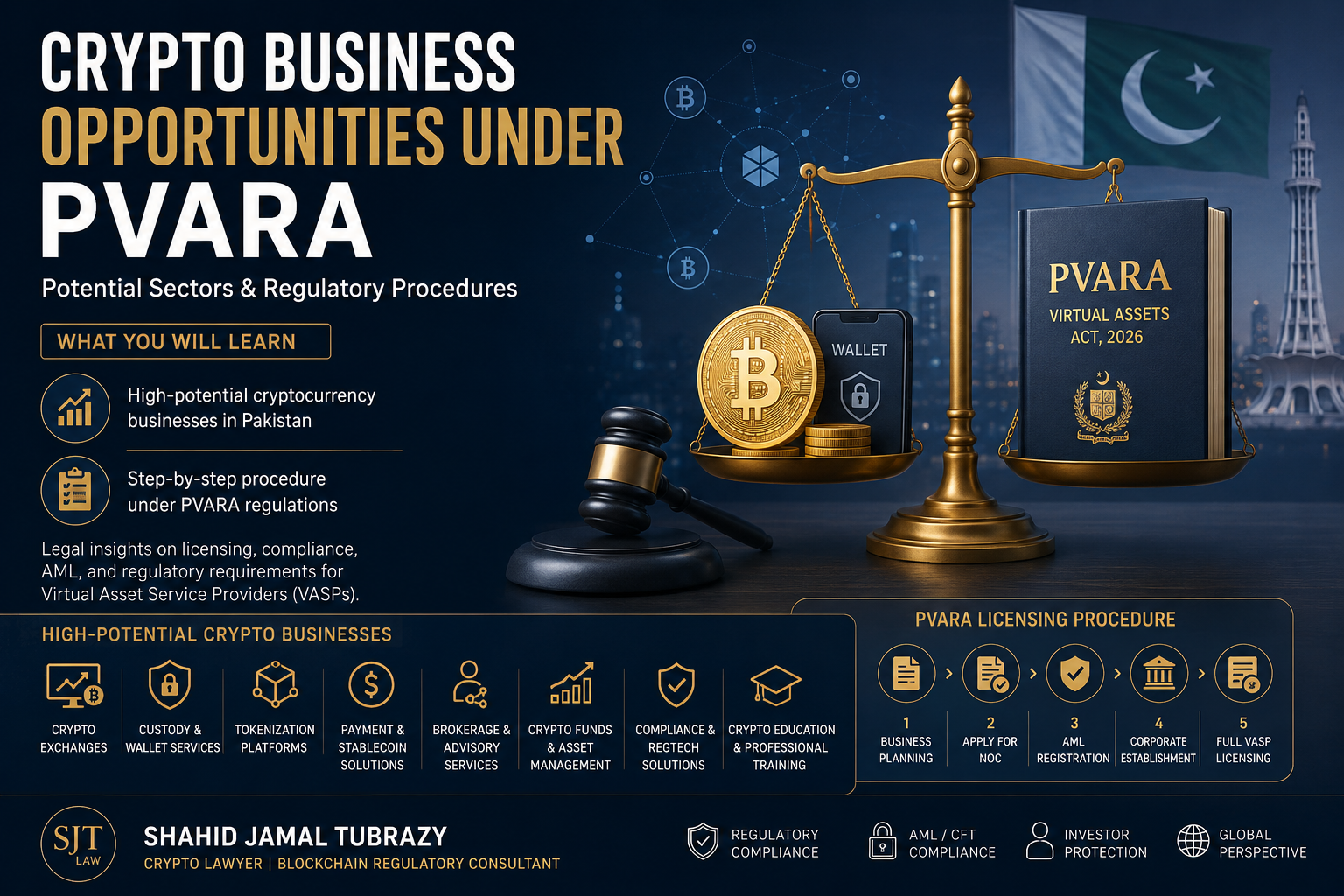
1. Cryptocurrency Exchanges
Crypto exchanges remain among the most profitable virtual asset businesses globally. These platforms facilitate the buying, selling, and trading of cryptocurrencies against fiat currencies and other digital assets.
Examples include:
- Spot trading platforms
- OTC trading desks
- Institutional trading platforms
- P2P marketplaces
Under PVARA, exchange operators are expected to obtain a Virtual Asset Exchange License before offering services in Pakistan.
Relevant Resources:
2. Custody and Wallet Services
Many institutions and high-net-worth investors require secure storage solutions for digital assets. Businesses offering:
- Custodial wallets
- Institutional custody
- Multi-signature solutions
- Asset safekeeping services
can benefit from growing institutional adoption.
PVARA identifies custody and wallet operations as regulated activities requiring licensing and compliance controls.
3. Tokenization Platforms
Real-world asset (RWA) tokenization is becoming one of the fastest-growing sectors in blockchain.
Potential assets include:
- Real estate
- Gold and precious metals
- Carbon credits
- Agricultural assets
- Investment funds
Tokenization allows fractional ownership and increased liquidity while reducing settlement costs.
4. Stablecoin and Payment Businesses
Businesses facilitating:
- Cross-border payments
- Remittances
- Merchant crypto payments
- Stablecoin settlement networks
may benefit significantly in emerging markets where international transfers remain expensive.
5. Crypto Brokerage and Advisory Services
Professional advisory services are increasingly demanded by:
- Institutional investors
- Family offices
- Startups
- Traditional financial institutions
PVARA contemplates licensing for advisory and brokerage activities involving virtual assets.
6. Crypto Funds and Asset Management
Investment management remains a major opportunity for qualified operators.
Examples include:
- Crypto hedge funds
- Quantitative trading funds
- Venture capital funds
- Tokenized investment products
Jurisdictions such as Dubai have already established dedicated regulatory categories for management and investment services.
7. Blockchain Compliance and RegTech Solutions
As regulation expands, demand increases for:
- KYC verification systems
- AML monitoring software
- Blockchain analytics
- Travel Rule compliance solutions
- Risk management platforms
These services support licensed VASPs and financial institutions.
8. Crypto Education and Professional Training
Regulatory developments create substantial demand for:
- Corporate training
- University partnerships
- Compliance certification programs
- Blockchain developer education
- Executive crypto workshops
This sector often requires fewer regulatory approvals while benefiting from industry growth.
PVARA Licensing Process
The current PVARA framework generally requires Virtual Asset Service Providers (VASPs) to obtain regulatory approval before commencing operations. The process currently begins with a No Objection Certificate (NOC) application before full licensing becomes available.
Step 1 – Business Planning
Prepare:
- Detailed business plan
- Financial projections
- Corporate structure
- Risk assessment
- Compliance framework
Step 2 – Apply for NOC
Applicants submit documentation to PVARA for preliminary review and approval.
Step 3 – AML Registration
Applicants are expected to establish AML/CFT procedures and complete registration requirements with relevant authorities, including the Financial Monitoring Unit (FMU).
Step 4 – Corporate Establishment
The applicant must maintain an appropriate legal entity structure and comply with Pakistani corporate laws.
Step 5 – Full VASP Licensing
When the full licensing framework becomes operational, businesses will apply for the specific license category corresponding to their activities.
Key Compliance Requirements
PVARA identifies several core requirements for licensed operators:
Corporate Governance
- Qualified management
- Fit and proper directors
- Internal controls
AML/CFT Compliance
- Customer Due Diligence (CDD)
- Know Your Customer (KYC)
- Transaction monitoring
- Suspicious transaction reporting
Cybersecurity
- Security audits
- Incident response plans
- Custody controls
Consumer Protection
- Risk disclosures
- Segregation of client assets
- Complaint handling procedures
Business Continuity
- Disaster recovery plans
- Operational resilience measures
Lessons from International Regulatory Models
Pakistan’s emerging framework shares similarities with advanced jurisdictions such as Dubai’s Virtual Assets Regulatory Authority (VARA), which regulates activities including:
- Exchange Services
- Broker-Dealer Services
- Custody Services
- Advisory Services
- Lending and Borrowing
- Asset Management
- Transfer and Settlement
- Token Issuance
Such activity-based licensing models provide legal certainty while encouraging innovation.
Conclusion
Pakistan’s virtual asset sector is entering a transformative phase. Businesses that establish robust governance, compliance systems, and regulatory engagement strategies are likely to be best positioned to capitalize on the opportunities created by the Virtual Assets Act, 2026 and the PVARA framework.
The most promising sectors include cryptocurrency exchanges, custody solutions, tokenization platforms, payment infrastructure, brokerage services, asset management, blockchain compliance technologies, and educational services. Entrepreneurs entering these sectors should prioritize legal structuring, AML compliance, licensing readiness, and cybersecurity from the outset.
About the Author
Shahid Jamal Tubrazy is a Crypto Lawyer and Blockchain Regulatory Consultant advising cryptocurrency exchanges, token issuers, fintech companies, investment funds, and blockchain startups on licensing, compliance, regulatory strategy, AML/CFT obligations, tokenization, and international crypto regulations.
Disclaimer
The information provided in this article is intended for general informational purposes only and should not be construed as legal or financial advice. Readers are encouraged to seek independent professional counsel tailored to their specific circumstances.
Author & Crypto Consultant
Shahid Jamal Tubrazy – Crypto & Fintech Law Consultant
Shahid Jamal Tubrazy is a recognized professional in the field of cryptocurrency and blockchain law, with specialized certification in Crypto Law from Duke University. As an experienced fintech lawyer, he provides comprehensive legal services across the digital asset ecosystem, including regulatory licensing, legal structuring for ICOs, STOs, DeFi projects, and DAOs.
He also offers expertise in crypto dispute resolution, mediation, negotiation, and mergers & acquisitions within the blockchain sector. With a strong portfolio of published work on blockchain regulation and cryptocurrency law, Shahid delivers practical legal insights to help clients navigate complex regulatory landscapes, ensure compliance, and achieve strategic growth in the evolving fintech industry.
📧 Email: shahidtubrazy@gmail.com
🌐 Website: https://cyberlawconsult.wixsite.com/cryptolawyer
📘 Facebook: https://www.facebook.com/fintechcryptolawyer
🔗 LinkedIn: https://www.linkedin.com/in/tubrazyfintechlawyer/
📝 Blogger: https://sjtubrazylegalpages.blogspot.com/