
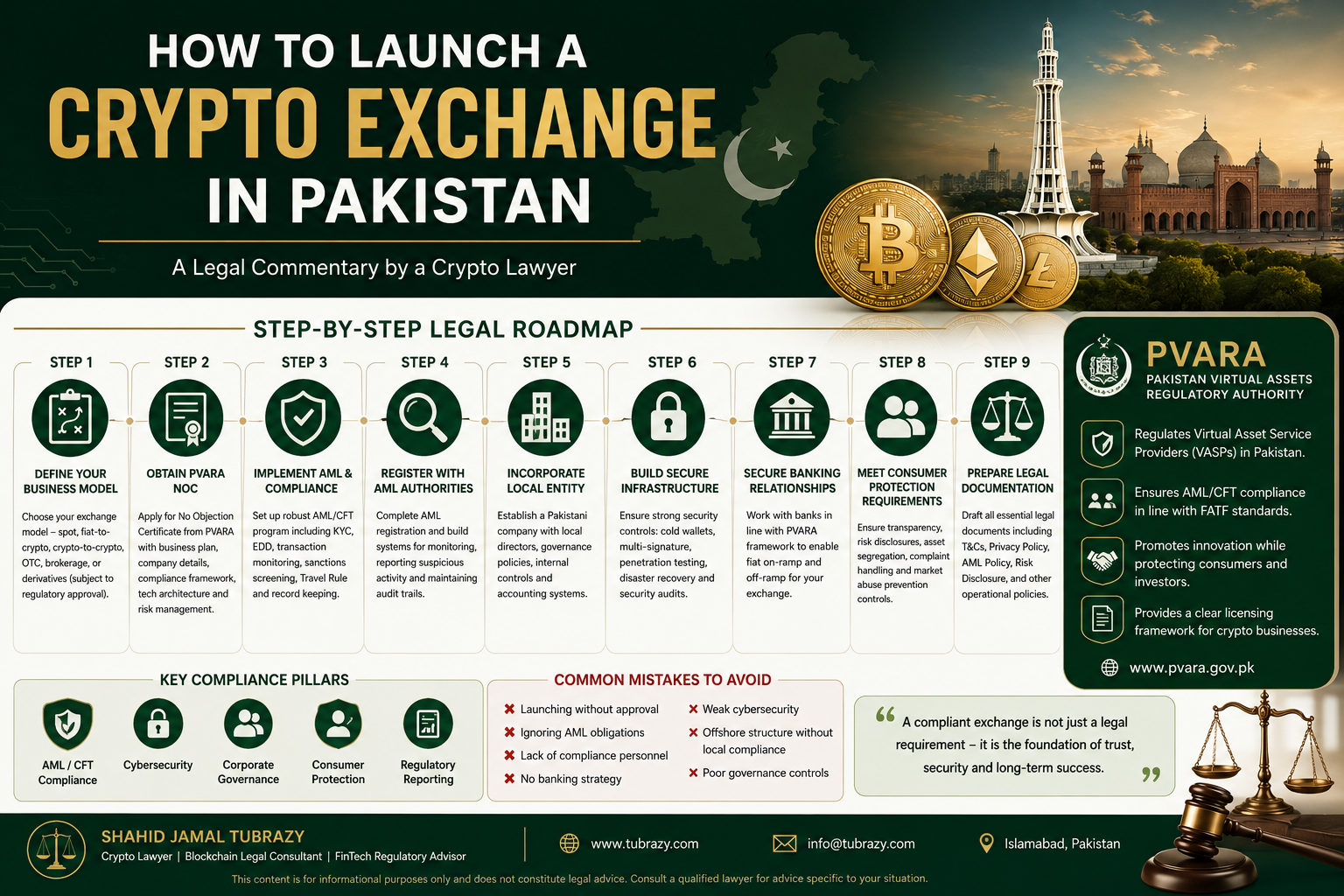
How to Launch a Crypto Exchange in Pakistan
Pakistan’s cryptocurrency sector has undergone a significant transformation. Following the introduction of the Virtual Assets Act and the establishment of the Pakistan Virtual Assets Regulatory Authority (PVARA), entrepreneurs now have a clearer legal pathway for launching regulated cryptocurrency exchanges within Pakistan.
The new framework is designed to align Pakistan with international standards established by the Financial Action Task Force (FATF), while encouraging innovation in blockchain technology, digital assets, and financial technology.
The New Regulatory Environment
The primary regulator for virtual asset businesses in Pakistan is the Pakistan Virtual Assets Regulatory Authority (PVARA).
Official Regulatory Resources:
• PVARA Official Website: https://pvara.gov.pk
• Licensing Framework: https://www.pvara.gov.pk/licensing
• Regulatory Framework: https://pvara.gov.pk/regulations
• FAQs for VASPs: https://www.pvara.gov.pk/faq
Under the current framework, cryptocurrency exchanges are classified as Virtual Asset Service Providers (VASPs) and must obtain regulatory approval before offering services to Pakistani customers.
Operating an exchange without authorization may expose founders and operators to regulatory penalties, enforcement actions, and potential criminal liability.
Step 1: Define Your Exchange Business Model
Before seeking regulatory approval, founders should determine the nature of their proposed exchange.
Common exchange models include:
• Spot cryptocurrency exchange
• Fiat-to-crypto exchange
• Crypto-to-crypto trading platform
• Brokerage platform
• OTC trading desk
• Institutional trading platform
• Derivatives and advanced trading services (subject to regulatory approval)
The selected business model will affect licensing requirements, compliance obligations, cybersecurity standards, and capital requirements.
Step 2: Obtain a PVARA No Objection Certificate (NOC)
PVARA currently requires applicants to begin the licensing process through a No Objection Certificate (NOC) application.
The NOC process generally requires submission of:
• Detailed business plan
• Corporate structure documents
• Shareholder information
• Beneficial ownership disclosures
• Compliance framework
• AML/CFT policies
• Technology architecture
• Risk management procedures
The NOC serves as preliminary regulatory clearance and allows the applicant to proceed with subsequent licensing stages.
Step 3: Implement AML and Compliance Systems
Anti-Money Laundering (AML) compliance is one of the most important regulatory obligations for crypto exchanges.
A compliant exchange should implement:
• Customer Identification Program (KYC)
• Enhanced Due Diligence (EDD)
• Transaction monitoring
• Suspicious Activity Reporting
• Travel Rule compliance
• Sanctions screening
• Blockchain analytics monitoring
• Record retention procedures
Pakistan’s framework is heavily influenced by FATF standards, making AML compliance a central requirement for obtaining and maintaining a license.
Step 4: Register with Relevant AML Authorities
After obtaining regulatory clearance, applicants are expected to complete AML registration requirements and establish reporting mechanisms.
A regulated exchange must be capable of:
• Monitoring customer activity
• Detecting suspicious transactions
• Reporting suspicious activity
• Maintaining audit trails
• Cooperating with regulatory authorities
Failure to maintain adequate AML controls is one of the most common causes of enforcement actions against crypto exchanges globally.
Step 5: Incorporate a Local Entity
PVARA’s framework contemplates the establishment of a local legal entity operating under Pakistani law.
Most applicants will need:
• A Pakistani corporate structure
• Local directors and management
• Corporate governance policies
• Internal controls
• Accounting systems
• Independent compliance oversight
Corporate governance is increasingly viewed by regulators as important as technical security.
Step 6: Build Secure Exchange Infrastructure
Regulators expect crypto exchanges to maintain strong cybersecurity controls.
Key technical requirements generally include:
• Cold wallet custody
• Multi-signature authorization
• Penetration testing
• Disaster recovery planning
• Data protection controls
• Incident response procedures
• Independent security audits
• Business continuity planning
Security failures often create regulatory liability in addition to reputational damage.
Step 7: Banking Relationships
Historically, banking access represented a major challenge for crypto businesses in Pakistan.
However, recent regulatory developments indicate that licensed virtual asset service providers may now obtain banking services subject to regulatory oversight and compliance requirements.
This development could significantly improve fiat on-ramp and off-ramp capabilities for licensed exchanges.
Step 8: Consumer Protection Requirements
A compliant exchange should maintain:
• Transparent terms of service
• Risk disclosures
• Complaint handling procedures
• Customer support systems
• Asset segregation policies
• Market abuse prevention controls
• Conflict of interest policies
Investor protection remains a major regulatory priority globally.
Step 9: Legal Documentation
Before launch, an exchange should prepare:
• Terms and Conditions
• Privacy Policy
• AML Policy
• Risk Disclosure Statement
• Custody Agreements
• Market Conduct Rules
• Token Listing Policy
• Internal Compliance Manual
Proper legal documentation can significantly reduce operational and regulatory risk.
Common Mistakes Made by Crypto Exchange Startups
Many crypto startups fail because they:
• Launch before obtaining approval
• Ignore AML obligations
• Lack compliance personnel
• Fail to secure banking relationships
• Underestimate cybersecurity requirements
• Use offshore structures without local compliance
• Have inadequate governance controls
A successful exchange should treat legal compliance as a core business function rather than a post-launch consideration.
Final Thoughts
Pakistan is rapidly emerging as one of the most important developing markets for cryptocurrency and digital assets. The introduction of PVARA and the Virtual Assets framework provides a legitimate path for entrepreneurs seeking to establish regulated crypto exchanges.
Founders who prioritize compliance, cybersecurity, governance, and consumer protection will be best positioned to obtain regulatory approval and attract institutional partners.
As global regulators continue increasing scrutiny of virtual asset businesses, a well-structured and fully compliant exchange will possess a substantial competitive advantage.
Disclaimer
The information provided in this article is intended for general informational purposes only and should not be construed as legal or financial advice. Readers are encouraged to seek independent professional counsel tailored to their specific circumstances.
Author & Crypto Consultant
Shahid Jamal Tubrazy – Crypto & Fintech Law Consultant
Shahid Jamal Tubrazy is a recognized professional in the field of cryptocurrency and blockchain law, with specialized certification in Crypto Law from Duke University. As an experienced fintech lawyer, he provides comprehensive legal services across the digital asset ecosystem, including regulatory licensing, legal structuring for ICOs, STOs, DeFi projects, and DAOs.
He also offers expertise in crypto dispute resolution, mediation, negotiation, and mergers & acquisitions within the blockchain sector. With a strong portfolio of published work on blockchain regulation and cryptocurrency law, Shahid delivers practical legal insights to help clients navigate complex regulatory landscapes, ensure compliance, and achieve strategic growth in the evolving fintech industry.
📧 Email: shahidtubrazy@gmail.com
🌐 Website: https://cyberlawconsult.wixsite.com/cryptolawyer
📘 Facebook: https://www.facebook.com/fintechcryptolawyer
🔗 LinkedIn: https://www.linkedin.com/in/tubrazyfintechlawyer/
📝 Blogger: https://sjtubrazylegalpages.blogspot.com/