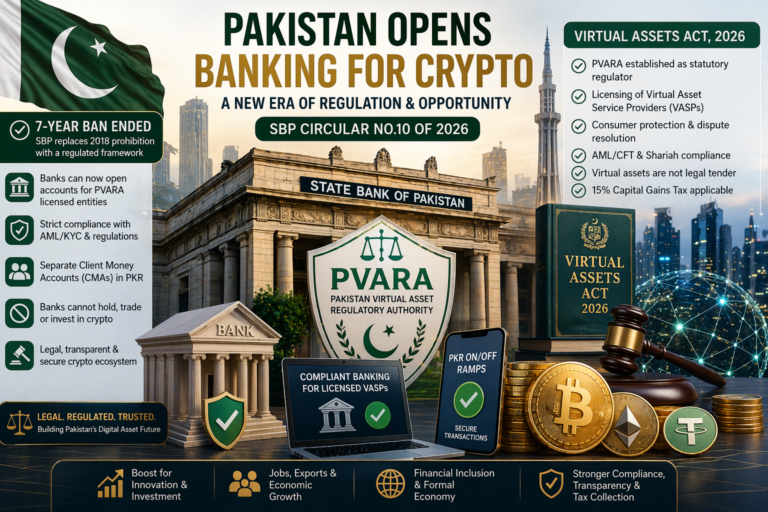

Pakistan’s PVARA Framework: A New Gateway for Global Crypto Businesses
Pakistan is rapidly positioning itself as an emerging jurisdiction for blockchain, fintech, and virtual asset innovation through the establishment of the Pakistan Virtual Assets Regulatory Authority (PVARA). With increasing global regulatory pressure on crypto businesses, many foreign companies are now exploring Pakistan as a potential jurisdiction for expansion, licensing, compliance structuring, and regional operations.
For prospective international clients, obtaining a PVARA-related authorization or operational approval in Pakistan involves a combination of legal structuring, regulatory compliance, corporate formation, AML/CFT controls, and engagement with local legal and compliance advisors.
Why Foreign Crypto Companies Are Interested in Pakistan
Pakistan offers several strategic advantages for foreign virtual asset businesses:
- A large and rapidly growing digital population;
- Expanding fintech and blockchain adoption;
- Increasing government focus on regulation instead of prohibition;
- Competitive operational costs;
- Access to South Asian markets;
- Growing developer and Web3 talent ecosystem.
Foreign entities including crypto exchanges, OTC desks, wallet providers, tokenization platforms, payment processors, custodians, DeFi projects, blockchain infrastructure providers, and fintech startups are now assessing the Pakistani regulatory market.
What Is PVARA?
The proposed and evolving Pakistan Virtual Assets Regulatory Authority (PVARA) framework is intended to regulate:
- Virtual Asset Service Providers (VASPs);
- Crypto exchanges;
- Custodial wallet providers;
- Token issuance platforms;
- Stablecoin-related activities;
- Blockchain financial infrastructure;
- Digital asset brokerage services;
- AML/CFT compliance obligations.
The framework is expected to align with international standards including recommendations issued by the Financial Action Task Force (FATF).
How Foreign Clients Can Enter Pakistan’s Crypto Market
1. Establish a Legal Entity in Pakistan
Foreign companies typically begin by establishing:
- a local Pakistani company,
- a branch office,
- a subsidiary,
- or a joint venture structure.
This usually involves incorporation through the Securities and Exchange Commission of Pakistan (SECP).
The corporate structure must clearly define:
- beneficial ownership,
- governance structure,
- operational model,
- compliance responsibility,
- and reporting obligations.
2. Conduct Regulatory and Legal Assessment
Before operating, foreign businesses should obtain a legal and compliance assessment covering:
- classification of services,
- licensing exposure,
- AML obligations,
- sanctions compliance,
- consumer protection risks,
- securities law considerations,
- taxation implications,
- and cross-border operational restrictions.
A proper legal opinion is especially important for:
- exchanges,
- token issuers,
- staking services,
- derivatives platforms,
- and custodial businesses.
3. Implement AML/CFT Compliance Systems
Pakistan’s crypto regulatory direction is expected to heavily emphasize compliance with FATF standards.
Foreign applicants should therefore implement:
- KYC procedures,
- transaction monitoring,
- suspicious transaction reporting,
- sanctions screening,
- risk assessment frameworks,
- compliance officer appointment,
- and cybersecurity protocols.
Alignment with global AML standards materially improves licensing credibility.
4. Prepare Licensing Documentation
Foreign applicants may be required to provide:
- corporate documents,
- shareholder disclosures,
- business plans,
- technical architecture,
- compliance manuals,
- AML policies,
- cybersecurity procedures,
- proof of capital adequacy,
- and beneficial ownership declarations.
Regulators may also assess:
- operational transparency,
- source of funds,
- international regulatory history,
- and risk management capabilities.
5. Local Legal Representation
Many foreign crypto businesses choose to engage Pakistani legal counsel experienced in:
- crypto regulation,
- fintech law,
- blockchain compliance,
- AML/CFT frameworks,
- and cross-border structuring.
Professional advisors can assist with:
- regulatory engagement,
- licensing strategy,
- legal opinions,
- policy drafting,
- and compliance implementation.
Potential Opportunities for Foreign Applicants
Pakistan may become particularly attractive for:
- crypto exchanges,
- tokenization projects,
- Web3 infrastructure providers,
- blockchain gaming platforms,
- fintech startups,
- remittance technologies,
- digital asset custodians,
- and institutional crypto service providers.
As regulatory clarity develops, early entrants may gain strategic advantages in market positioning and licensing readiness.
Important Regulatory Considerations
Foreign companies should understand that Pakistan’s crypto regulatory framework continues evolving. Businesses should therefore avoid operating without:
- proper legal review,
- regulatory engagement,
- and compliance structuring.
Additionally, no business should publicly claim “fully licensed” or “government approved” status unless formal authorization has actually been issued by the competent authorities.
Conclusion
Pakistan’s evolving PVARA ecosystem may create substantial opportunities for foreign crypto and blockchain companies seeking regulated expansion into emerging markets. However, successful market entry requires careful legal structuring, AML compliance, regulatory assessment, and professional guidance.
Foreign businesses interested in Pakistan should proactively prepare for licensing expectations by establishing compliant corporate structures, implementing international AML standards, and engaging experienced crypto legal professionals familiar with Pakistan’s developing virtual asset regulatory landscape.
For official Pakistani corporate regulatory information, visit:
Disclaimer
The information provided in this article is intended for general informational purposes only and should not be construed as legal or financial advice. Readers are encouraged to seek independent professional counsel tailored to their specific circumstances.
Author & Crypto Consultant
Shahid Jamal Tubrazy – Crypto & Fintech Law Consultant
Shahid Jamal Tubrazy is a recognized professional in the field of cryptocurrency and blockchain law, with specialized certification in Crypto Law from Duke University. As an experienced fintech lawyer, he provides comprehensive legal services across the digital asset ecosystem, including regulatory licensing, legal structuring for ICOs, STOs, DeFi projects, and DAOs.
He also offers expertise in crypto dispute resolution, mediation, negotiation, and mergers & acquisitions within the blockchain sector. With a strong portfolio of published work on blockchain regulation and cryptocurrency law, Shahid delivers practical legal insights to help clients navigate complex regulatory landscapes, ensure compliance, and achieve strategic growth in the evolving fintech industry.
📧 Email: shahidtubrazy@gmail.com
🌐 Website: https://cyberlawconsult.wixsite.com/cryptolawyer
📘 Facebook: https://www.facebook.com/fintechcryptolawyer
🔗 LinkedIn: https://www.linkedin.com/in/tubrazyfintechlawyer/
📝 Blogger: https://sjtubrazylegalpages.blogspot.com/