
USD1 Pakistan: Pakistan’s Stablecoin Future Under PVARA
Can Stablecoins Become Part of Cross-Border Payments?
The USD1 Pakistan discussion has created an important legal question: can regulated stablecoins eventually become part of Pakistan’s cross-border payment and settlement system?
The question gained significant attention in January 2026 when Pakistan signed a Memorandum of Understanding (MoU) with SC Financial Technologies LLC, an affiliated entity of World Liberty Financial. The agreement explores digital payment systems and possible uses of USD1 for cross-border transactions.
The Government of Pakistan described the MoU as a framework for discussions and technical work around emerging digital payment systems.
However, the agreement needs careful legal interpretation. An MoU to explore a payment system does not mean that Pakistan has approved USD1, authorized its general use, or recognized USD1 as legal tender.
That distinction is central to understanding the USD1 Pakistan legal and regulatory landscape.
What Is USD1?
USD1 is a dollar-denominated stablecoin associated with World Liberty Financial. According to the issuer, USD1 aims to maintain a 1:1 value with the U.S. dollar. The issuer says that the token is backed by U.S. dollars, U.S. government money-market funds and other cash equivalents.
World Liberty Financial also promotes USD1 for cross-border payments and on-chain settlement.
From a legal perspective, however, the issuer’s description does not decide how Pakistan will classify or regulate USD1.
The key question is how a USD1-based service would fit within Pakistan’s laws and financial regulations.
Businesses entering Pakistan’s digital-asset market should therefore understand the Virtual Assets Act 2026 and its impact on cryptocurrency businesses before launching a stablecoin-related service.
USD1 Pakistan and the PVARA Framework
The Virtual Assets Act 2026 established the Pakistan Virtual Assets Regulatory Authority (PVARA). PVARA is responsible for regulating virtual assets and Virtual Asset Service Providers (VASPs) in Pakistan.
The Act defines a “Fiat-Referenced Token” as a virtual asset that aims to maintain a stable value against a single official currency and can be redeemed at par value by its issuer.
This definition matters when regulators assess dollar-backed stablecoins such as USD1.
PVARA’s licensing framework also identifies Fiat-Referenced Token Issuance Services as a regulated activity.
As a result, any business involved in issuing or providing services related to a dollar-backed stablecoin needs to examine the applicable licensing requirements.
Stablecoin issuers should also review the PVARA minimum paid-up capital requirements when planning their business structure.
Is USD1 Approved in Pakistan?
The January 2026 MoU does not by itself establish that Pakistan has approved USD1 for general use.
The Government of Pakistan’s January 14, 2026 announcement said that the agreement with SC Financial Technologies would support discussions and technical work on digital payment systems and possible cross-border transactions.
This wording is important.
The announcement does not establish that:
- Pakistan has approved USD1 as legal tender;
- PVARA has granted a USD1 issuance licence;
- Pakistani banks can generally distribute USD1;
- Pakistan has launched a nationwide USD1 payment system; or
- consumers can freely use USD1 as a regulated payment instrument.
The safer legal description is that Pakistan has explored the potential use of USD1 and related digital payment infrastructure.
That is different from formally adopting USD1 as a national payment currency.
Businesses should keep this distinction in mind when discussing the USD1 Pakistan opportunity. An exploratory agreement should not be presented as a blanket regulatory approval.
For a wider explanation of Pakistan’s changing crypto rules, see From Ban to Licensing: Legal Analysis of Pakistan’s Crypto Framework.
PVARA’s Warning About Stablecoin Pilots
The regulatory position became clearer in April 2026.
PVARA issued an advisory about virtual-asset announcements, MoUs, pilots and partnerships. The advisory also covered stablecoin projects involving remittances and cross-border payments.
PVARA stated that virtual-asset services provided to users in Pakistan can fall under its regulatory authority. These services include issuance, transfer, custody, exchange and arranging transactions involving virtual assets and stablecoins.
PVARA also stated that agreements or pilots that result in, or directly enable, these services require prior authorization.
This point is particularly important for companies considering a USD1 Pakistan payment model.
A commercial partnership does not remove the need for regulatory approval. Businesses should address licensing and compliance requirements before launching a service.
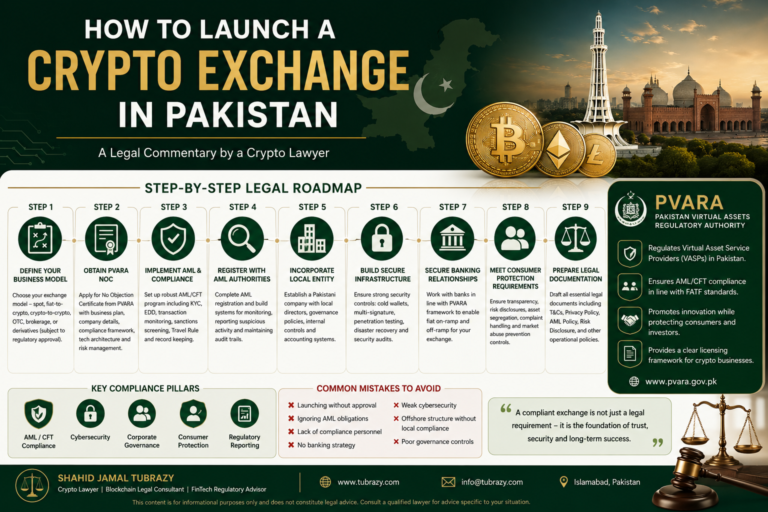
Companies planning a crypto project in Pakistan can learn more about the PVARA NOC process for crypto businesses before moving forward.
PVARA Licensing and USD1 Pakistan Businesses
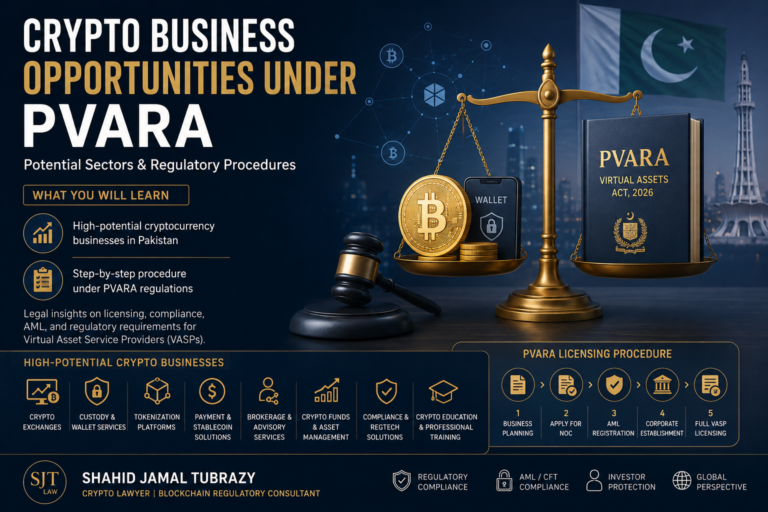
PVARA’s licensing framework requires VASPs to obtain a formal licence before offering regulated services in Pakistan.
The framework covers activities such as:
- exchange;
- custody;
- transfer and settlement;
- asset-referenced token issuance; and
- fiat-referenced token issuance.
A stablecoin payment platform may therefore raise several regulatory questions.
The business must identify who issues the stablecoin and who holds customer assets. It should also define who converts fiat into stablecoins and who converts stablecoins back into fiat.
The platform must clearly establish who provides the wallet or custody service and who handles cross-border transfers.
Compliance responsibilities also need clear ownership. These responsibilities may include KYC, transaction monitoring, sanctions screening and suspicious transaction reporting.
The answers can determine which licences, approvals or regulatory arrangements the business needs.
Anyone planning to establish a crypto business in Pakistan should review How to Start a Crypto Business Legally in Pakistan before launching operations.
How Stablecoins Could Support Cross-Border Payments
From a fintech-law perspective, the interest in stablecoins is understandable.
A blockchain-based dollar token can potentially provide:
- near-real-time settlement;
- 24/7 transfer capability;
- programmable transactions;
- transparent transaction records;
- support across different blockchain networks;
- lower settlement friction; and
- access to digital-dollar liquidity.
The issuer of USD1 specifically promotes cross-border payments and on-chain settlement as possible use cases.
For Pakistan, where remittances and international payments play an important economic role, these features make stablecoin infrastructure worth examining.
The potential benefits explain why the USD1 Pakistan discussion matters to fintech companies, payment businesses, banks and investors.
However, technology cannot replace legal authorization.
A blockchain transaction may move value across borders quickly, but the businesses providing the service still need to follow applicable laws and regulations.
AML and KYC Requirements for USD1 Pakistan Services
A regulated stablecoin payment system needs strong AML/CFT controls from the beginning.
Pakistan’s PVARA framework aims to bring the virtual-asset sector in line with international financial-crime standards. PVARA has also warned that unauthorized stablecoin activities may create regulatory, reputational and FATF-related risks.
Businesses should therefore understand AML and KYC compliance for crypto businesses in Pakistan before launching a stablecoin, exchange, payment or custody platform.
A compliant stablecoin payment system may need to address:
- Customer Due Diligence;
- Know Your Customer procedures;
- beneficial ownership;
- sanctions screening;
- transaction monitoring;
- suspicious transaction reporting;
- Travel Rule requirements where applicable;
- wallet-risk assessment;
- blockchain analytics;
- source-of-funds and source-of-wealth checks; and
- recordkeeping.
International payment infrastructure needs these controls from the start.
Treating compliance as a later step can create serious legal and business risks for a USD1 Pakistan payment platform.
Banks and the USD1 Pakistan Payment Model
Another major legal issue is the relationship between stablecoins and Pakistan’s banking system.
A stablecoin does not automatically become part of the regulated payment system simply because blockchain technology can transfer value across borders.
The legal structure must explain how the stablecoin interacts with:
- commercial banks;
- foreign-exchange controls;
- payment institutions;
- remittance companies;
- regulated VASPs;
- customer accounts;
- fiat settlement;
- reporting obligations; and
- Pakistan’s monetary and financial system.
This makes the January 2026 MoU more significant than a simple cryptocurrency partnership.
Its focus on digital payment architecture raises questions about how blockchain-based settlement could connect with existing financial infrastructure.
Pakistan’s banking environment is also changing as regulators develop the country’s digital-asset framework. Businesses should therefore follow developments concerning crypto banking and Pakistan’s evolving banking framework.
USD1 Pakistan May Involve Multiple Regulators
A USD1-based payment model in Pakistan could involve several regulators, depending on how the business operates.
PVARA would play a central role when regulated virtual-asset services are involved.
The State Bank of Pakistan (SBP) may become relevant when a business involves banking, payment systems, foreign exchange or other activities under SBP’s regulatory authority.
The Securities and Exchange Commission of Pakistan (SECP) may also become relevant depending on the legal nature of the product or service.
For this reason, businesses should complete a regulatory review before launching a stablecoin product.
Foreign companies also need to consider how Pakistan’s rules apply to international crypto businesses. The PVARA framework for global crypto businesses entering Pakistan provides useful context for this issue.
Innovation Does Not Mean Regulatory Approval
There is a strong policy argument for Pakistan to explore stablecoin technology.
At the same time, policymakers should keep a clear distinction between:
exploring a technology, and
approving a regulated financial product.
This distinction protects consumers, banks, businesses and the government.
PVARA’s April advisory provides a similar warning. The regulator has encouraged people and businesses considering stablecoin use cases, tokenization projects or blockchain pilots to engage with PVARA through options such as the Regulatory Sandbox, No-Action Relief Letters or NOC process.
A company should not assume that calling a project a “technology platform” removes it from financial regulation.
The actual services provided by the business matter.
For example, a company may describe itself as a technology provider while its platform actually performs custody, exchange, transfer, brokerage or settlement functions.
Regulators may consider those activities when deciding which rules apply.
What Happens Next for USD1 Pakistan?
The future legal question is not simply whether Pakistan “will adopt USD1.”
A more important question is whether Pakistan can build a regulated framework in which authorized stablecoin infrastructure works alongside existing banking, payment and foreign-exchange systems.
That framework could include:
- a controlled pilot;
- a regulatory sandbox;
- licensed VASP infrastructure;
- compliant custody arrangements;
- regulated fiat settlement; and
- strong AML/KYC controls.
The regulatory framework will determine whether a stablecoin model can move from policy discussions to a lawful commercial launch.
Businesses preparing for this environment should also organize their regulatory documents early. The Complete Guide to PVARA Regulatory Documents for Cryptocurrency Businesses explains the types of documentation that crypto businesses may need to prepare.
My Legal View on USD1 Pakistan
As a cryptocurrency and fintech lawyer, I consider the USD1 Pakistan development significant because it shows the growing connection between government payment policy, blockchain infrastructure and regulated virtual assets.
Legal caution remains essential.
The January 2026 MoU should not be described as blanket approval of USD1 in Pakistan. USD1 should also not be described as legal tender in Pakistan.
The safer legal description is that Pakistan entered into an MoU to explore digital payment systems and potential cross-border applications involving USD1.
Later PVARA guidance also makes clear that stablecoin pilots and services within its regulatory scope require appropriate prior authorization.
That distinction matters to lawyers, exchanges, fintech companies, banks, stablecoin issuers and investors.
Conclusion: The Future of USD1 Pakistan
Pakistan is entering an important phase in the development of its regulated digital-asset economy.
The combination of the Virtual Assets Act 2026, PVARA’s licensing framework and the exploration of stablecoin-based cross-border payment infrastructure could create a new model for digital settlement.
USD1 may become part of that discussion.
However, moving from an MoU to a lawful payment product requires much more than technology integration.
Businesses must consider regulatory authorization, licensing, AML/KYC controls, consumer protection, cybersecurity, banking integration, foreign-exchange compliance and effective supervision.
The opportunity is therefore not simply “crypto versus traditional finance.”
The bigger question is whether Pakistan can build a legally compliant bridge between digital assets and traditional finance.
For Pakistan, the potential benefits include faster digital settlement, greater fintech innovation and potentially more efficient cross-border financial infrastructure.
But one principle should remain clear:
Innovation should move forward—but under the law.
Important Official and Industry Resources
- Pakistan Virtual Assets Regulatory Authority (PVARA)
- PVARA Licensing Framework
- PVARA Advisory on Virtual Asset-Related Announcements and Activities
- Virtual Assets Act 2026
- Government of Pakistan – Ministry of Finance
- State Bank of Pakistan
- World Liberty Financial – USD1 Information
- FATF – Virtual Assets and VASPs
Disclaimer
The information provided in this article is intended for general informational purposes only and should not be construed as legal or financial advice. Readers are encouraged to seek independent professional counsel tailored to their specific circumstances.
Readers should seek independent professional counsel tailored to their specific circumstances before making legal, financial or business decisions involving virtual assets or stablecoins.
Author & Crypto Consultant
Shahid Jamal Tubrazy – Crypto & Fintech Law Consultant
Shahid Jamal Tubrazy is a recognized professional in the field of cryptocurrency and blockchain law, with specialized certification in Crypto Law from Duke University. As an experienced fintech lawyer, he provides comprehensive legal services across the digital asset ecosystem, including regulatory licensing, legal structuring for ICOs, STOs, DeFi projects, and DAOs.
He also offers expertise in crypto dispute resolution, mediation, negotiation, and mergers & acquisitions within the blockchain sector. With a strong portfolio of published work on blockchain regulation and cryptocurrency law, Shahid delivers practical legal insights to help clients navigate complex regulatory landscapes, ensure compliance, and achieve strategic growth in the evolving fintech industry.
📧 Email: cryptolawyer@cryptolawconsult.com
🌐 Website: https://cryptolawconsult.com/
🔗 LinkedIn: https://www.linkedin.com/in/shahidtubrazy/